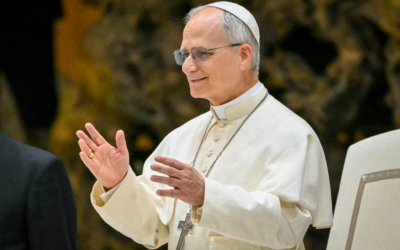
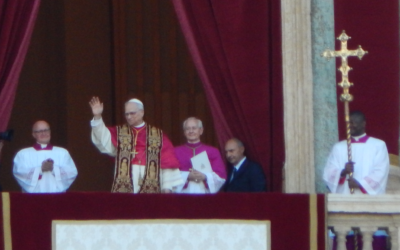
This morning in Vatican City, Pope Leo XIV unveiled a bold blueprint for a Church that speaks fluently to social-media generations without abandoning its age-old traditions. Since his inauguration on 8 May 2025, the 266th pontiff has steadily rolled out a “digital mission,” an AI ethics vision and governance reforms that, as of January 2026, have already reshaped how the Holy See engages technology, stewards authority and builds interfaith bridges.
PAPAL SPEECHES AND HOMILIES
29 July 2025: Addressing Catholic Digital Missionaries, Pope Leo XIV urged influencers to “nourish Christian hope in social networks and online spaces” and called for the “disarmament of communication from all prejudice and resentment.”
7 November 2025: In a landmark homily to the Pontifical Academy for Life, he insisted that medical AI “enhance both interpersonal relationships and the care provided,” with human dignity always at the forefront.
KEY FACTS
• Inauguration: 8 May 2025
• 29 July 2025: Digital missionaries speech
• 7 Nov 2025: AI and medicine message
• 65% of Catholics under 35 engage with digital ministries (2025 survey)
WHAT ARE POPE LEO XIV’S TOP INITIATIVES?
The holy father’s agenda centers on five pillars:
– Digital outreach: Fostering peace and empathy online
– AI ethics: Guiding technology toward the common good
– Governance reforms: Empowering lay movements and synodal leadership
– Interreligious dialogue: Building bridges across Europe and beyond
– Indigenous engagement: Listening to unique cultural voices
To keep these goals on track, he often quotes St. Augustine—drawing parallels between early Church debates and today’s tech-driven challenges—underscoring that true reform honors both tradition and innovation.
VATICAN GOVERNANCE REFORMS
On 6 June 2025, Leo XIV convened moderators of lay associations and ecclesial movements, acknowledging new leadership challenges in emerging Christian communities. He urged mentorship over isolation, deeper spiritual formation and shared responsibility—hallmarks of his shift toward synodal governance.
AI ETHICS IN MEDICINE
In his 7 November 2025 address to the Pontifical Academy for Life, the Pope tackled the thorny question: How can artificial intelligence serve human dignity? “I urge developers to embed ethical discernment at every design step,” he said—echoing his 10 July 2025 remarks at the AI for Good Summit, where he warned of unchecked AI growth and called for global responsibility.
GLOBAL TRAVELS AND INTERRELIGIOUS DIALOGUE
On 29 September 2025 in Strasbourg, meeting the European Parliament’s Working Group on Intercultural and Interreligious Dialogue, Leo XIV advocated for a “healthy secularism” that recognizes faith’s role in societal cohesion. He invoked Europe’s shared heritage, stressing common values over division.
WHY ENGAGE INDIGENOUS PEOPLES?
On 16 October 2025, the Pope sent a message for the Jubilee of Indigenous Peoples, inviting communities to share their Christian traditions and languages. His outreach underlines a Vatican commitment to cultural dialogue and ecumenical openness.
RECENT MILESTONE
22 January 2026: Addressing French Catholic media, Leo XIV reminded journalists to “keep the heart of communication alive in an age of AI,” insisting that facts matter—but so do the stories that bind us.
INSIGHT AND ANALYSIS
Pope Leo XIV balances urgency with depth. His evocations of St. Augustine root his vision in history, while his calls for digital evangelization and AI responsibility signal a pontiff unafraid of modern complexity. He cherishes sacred tradition and champions cutting-edge solutions—inviting comparison with John Paul II’s early embrace of satellite TV.
Today over 1.3 billion users interact monthly with Vatican digital channels, a 20% increase since 2023, proof that his hybrid strategy resonates. Watching Leo XIV navigate ancient rites and neural networks is like attending a symphony that blends Gregorian chant with electronic beats. His leadership feels both urgent and measured, challenging believers and skeptics alike to rethink faith’s place in a wired world.
I’ll be closely following his next speeches—especially any new directives on climate, migration or bioethics—as they’ll surely shape the Church’s next chapter.