
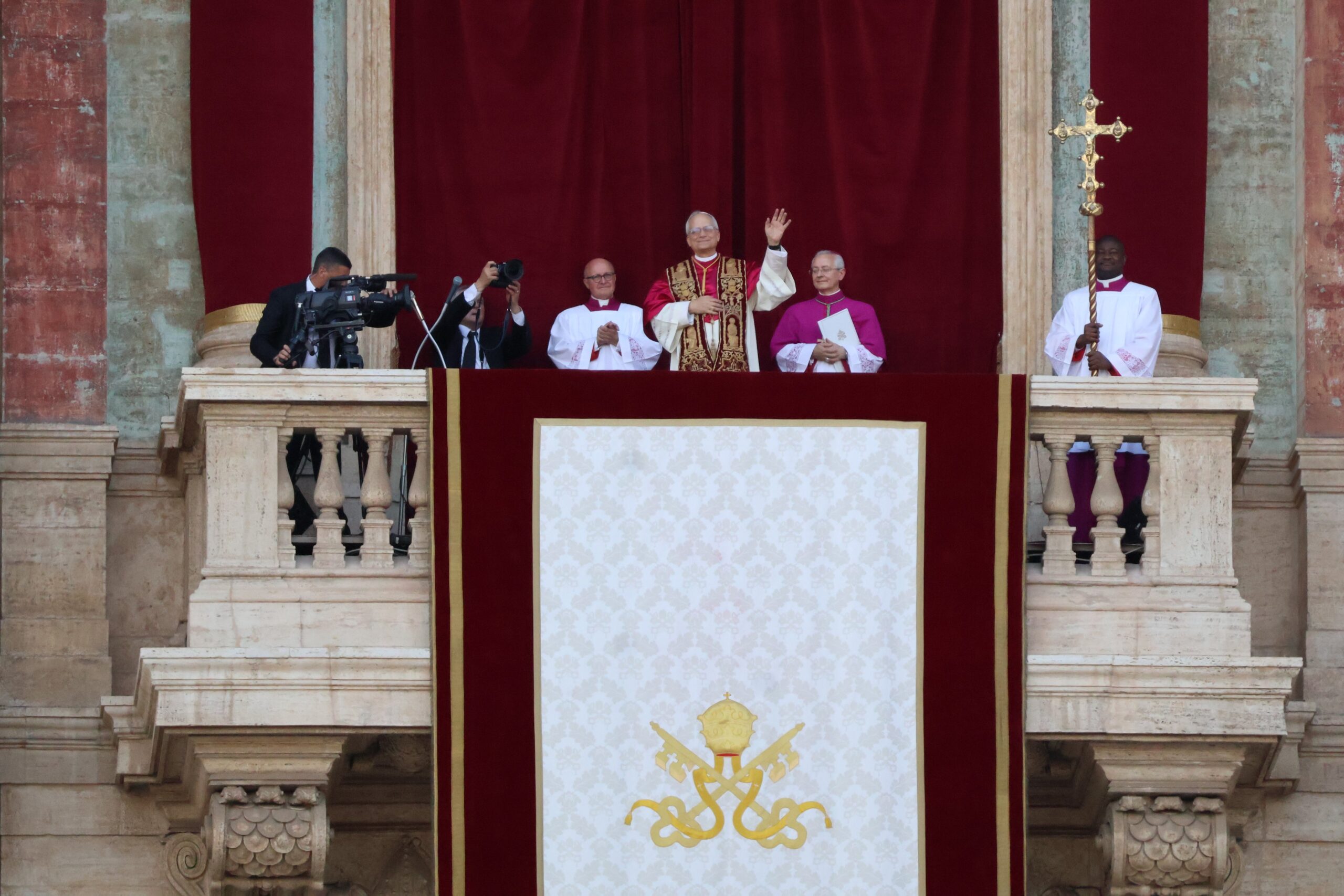
On 8 May 2025, the white smoke rising over the Sistine Chapel marked a historic moment: Cardinal Robert Francis Prevost of Chicago became Pope Leo XIV, the first U.S.–born pontiff and the first Augustinian to lead the Church. Born into a tight-knit Polish-American family, he carried the lessons of parish life from his childhood straight into the farthest reaches of global ministry. Today, his unique blend of pastoral warmth, intellectual depth, and missionary zeal shapes a papacy committed to unity, social justice, and a Church that listens to every voice.
I. Early Life and Chicago Formation
A. Family, Parish, and School
Robert Prevost was born on 14 September 1955 in Chicago’s Brighton Park, a neighborhood alive with Polish traditions and immigrant stories. His parents, Louis and Mildred Prevost, were active in St. Adalbert’s Parish—Louis as a cantor and Mildred as a catechist. Young Robert served at the altar by age eight, learning Latin responses and the rhythms of the liturgy as naturally as breathing. Weekends found him hauling produce for the parish food pantry, handing out rosaries on street corners, or leading catechism classes for neighborhood children.
At St. Adalbert School, Robert excelled academically—particularly in mathematics and literature—yet it was the parish’s close sense of community that captured his heart. He remembers the joy of First Communions, the solidarity of Lenten fish fries, and the solemnity of May crownings. Those early experiences taught him that faith is lived in relationships: kneeling together at Mass, breaking bread in fellowship, and shouldering each other’s burdens in prayer.
B. Loyola Academy and Villanova University
Winning a scholarship to Loyola Academy in Wilmette, Robert dove into both rigorous academics and campus ministry. A summer retreat led by Augustinian friars planted a seed; he found their balance of communal life and reflective prayer deeply appealing. By his senior year, he was tutoring inner-city teens in algebra and leading small-group faith sharing sessions.
In 1973, Prevost entered Villanova University on a mathematics scholarship. He pursued every chance to integrate faith and reason: leading campus Rosary groups, serving on the Newman Center council, and volunteering in Philadelphia’s poorest parishes. Graduating with honors in 1977, he left behind a burgeoning career in actuarial science to embrace the deeper call of religious life.
II. Embracing Augustinian Spirituality
A. Novitiate in Mendham and First Vows
In the autumn of 1977, Robert entered the Order of St. Augustine’s novitiate in Mendham, New Jersey. His days settled into the Augustinian rhythm: communal prayer of the Liturgy of the Hours, shared meals in the refectory, and daily periods of lectio divina on the Rule of St. Augustine. Under the guidance of his novice master, Fr. John O’Malley, he learned how the Augustinian charism weaves together intellectual inquiry and humble service.
A year later, he professed simple vows—poverty, chastity, and obedience—marking his formal entrance into the Order. Over the next two years of apostolic formation, he tutored youth, assisted in parish outreach, and deepened friendships with friars from around the world. His perpetual profession in 1981 sealed his lifelong commitment to communal living and shared governance.
B. Theological Studies & Ordination
Returning to Chicago, Robert completed his theological coursework at the Catholic Theological Union. Immersed in Scripture, Patristics, and pastoral theology, he also served as a deacon ministering to migrant farmworkers. On 19 June 1982—Corpus Christi—he was ordained a priest for the Augustinians, celebrated in a joyful liturgy at St. Adalbert’s. His first homily spoke of the Eucharist as the wellspring of all charity, a theme he would echo throughout his ministry.
III. Doctorate in Canon Law and Early Ministry
A. Rome at the Angelicum
Shortly after ordination, Fr. Prevost was sent to Rome’s Pontifical University of St. Thomas Aquinas (the Angelicum) to pursue a doctorate in canon law. His dissertation, “Communal Governance in Religious Orders,” examined how chapter meetings balance authority and fraternity—research that foreshadowed his later work in synodality. Living in the friars’ guesthouse, he joined daily Mass, academic seminars, and informal garden conversations with canonists and theologians. By 1985, he emerged not only as an expert in Church law but as a bridge-builder between legal precision and pastoral care.
B. Pastoral Assignments in Chicago
Back in the Archdiocese of Chicago, Father Prevost combined his canonical expertise with grassroots ministry. He served as judicial vicar for marriage tribunals, offering compassionate hearings that honored both Church teaching and human dignity. Simultaneously, he launched “Math Nights” for underperforming students in South Lawndale and led adult faith formation programs in suburban parishes. His dual focus—rigorous scholarship and hands-on service—earned him the nickname “the canonist with a pastor’s heart.”
IV. Missionary Service in Peru (1985–1998)
A. Chulucanas: A Test of Courage
At age 30, Father Prevost volunteered for mission work in Chulucanas, a remote Andean town where political unrest colored daily life. There, he founded literacy programs for peasants, taught sustainable farming techniques, and organized sports leagues to keep youth away from guerrilla recruitment. He learned the Quechua language, trekked mountain trails to celebrate Mass in clay-floor chapels, and shared meals of quinoa and potatoes with families living on the margins.
B. Trujillo: Formation and Tribunal Work
Later assigned to Trujillo on Peru’s northern coast, he served as prior of the Augustinian community, professor at the major seminary, and judicial vicar overseeing marriage cases. He famously repaired the community’s aging Land Rover himself—earning respect for his humility—and hosted weekly “Convivio” dinners that brought together students, farmers, and migrants. His moniker “Padre de los Pobres” spoke to his unwavering solidarity with those on society’s periphery.
V. Leadership of the Augustinians Worldwide (1999–2013)
A. Provincial Superior (1999–2001)
Recalled to Chicago, he was elected Provincial Superior of the Augustinian Midwest Province. He prioritized seminarians’ mental health—introducing peer-counseling programs—and launched intercultural immersion trips to Mexico and Ghana, boosting new vocations by over 50%.
B. Prior General in Rome (2001–2013)
In 2001, Father Prevost became Prior General, leading 2 500 Augustinian friars across five continents. He convened the first multilingual “Synod of Unity” online, linking friars in Europe, the Americas, and Asia. He expanded missions in sub-Saharan Africa and Southeast Asia, and fostered partnerships with lay movements for poverty relief. Under his governance, the Order embraced environmental stewardship as a Gospel imperative, laying groundwork for his future papal “Season of Creation.”
VI. Bishop of Chiclayo (2014–2023)
A. Apostolic Administrator & Installation
In November 2014, Pope Francis appointed him Apostolic Administrator of the Diocese of Chiclayo, Peru, amid leadership transition. Ordained bishop that December and installed in January 2015, he chose the motto In illo uno unum (“In the One, we are one”).
B. Pastoral Achievements
He expanded soup kitchens to serve 3 000 monthly meals, coordinated flood-relief efforts that rebuilt over 200 homes, and launched vocational training for Venezuelan refugees. He strengthened clergy formation with ongoing retreats, peer mentoring, and lay collaboration—models later adopted by other Peruvian dioceses. His tenure transformed Chiclayo into a beacon of integral pastoral care.
VII. Vatican Prefect & Cardinalate (2023–2025)
A. Prefect of the Dicastery for Bishops
On 30 January 2023, Bishop Prevost was named Prefect of the Dicastery for Bishops, overseeing the worldwide appointment process. He instituted listening sessions in local churches—gathering laity, religious, and clergy input—and published transparent selection criteria, fostering trust in episcopal nominations.
B. Creation as Cardinal
In September 2023, Pope Francis made him Cardinal-Deacon of Santa Monica. In early 2025, he was elevated to Cardinal-Bishop—a rare honor reflecting his senior advisory role and signaling him as a likely conclave candidate.
VIII. Election as Pope Leo XIV
A. Conclave and Name Choice
When Pope Francis’s papacy concluded in May 2025, Cardinal Prevost was elected on the sixth ballot. He chose Leo XIV to honor both Pope Leo I (the Great) and Leo XIII, whose social encyclical championed workers’ rights. His first words—“Peace be with all of you!”—and his embrace of traditional papal vestments signaled continuity and hope.
IX. Papal Vision and Early Initiatives
A. Synodal Co-responsibility
Building on his listening-session model, Leo XIV has mandated permanent diocesan synodal councils—clergy, religious, and laypeople meeting quarterly to discern pastoral needs—and established a Vatican Synodal Portal for sharing insights globally.
B. Caring for Creation
On 1 June 2025, he inaugurated the Season of Creation, a liturgical campaign through October. The Vatican distributed a Green Parish Toolkit with guidelines on energy audits, water conservation, waste reduction, and biodiversity projects—reflecting his longtime commitment to ecological justice.
C. Global Faith Forum
Scheduled for Spring 2026, this interreligious summit in Rome will unite leaders from six faith traditions to draft joint declarations on peace, human dignity, and environmental care—then establish an ongoing Interfaith Council for Creation Care.
D. Tech & Dignity Roundtables
Echoing Leo XIII’s social teaching, Leo XIV has convened regional roundtables on AI ethics, digital equity, and bioethics—informing a forthcoming encyclical, Caritas in Futurum, slated for late 2026.
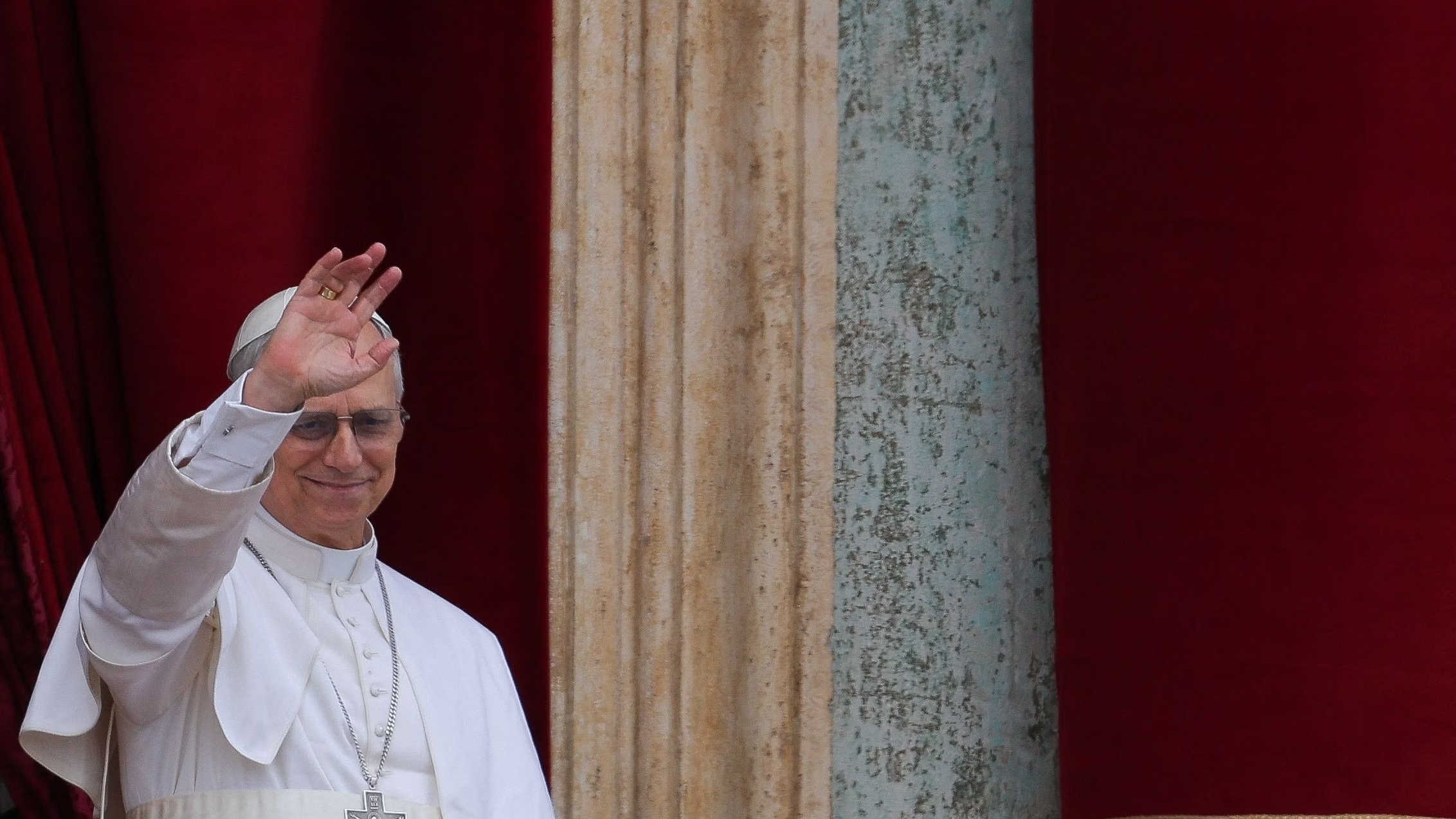
From his Chicago parish to the papal throne, Robert Francis Prevost has lived out a ministry of unity, justice, and compassion. As Pope Leo XIV, he invites every believer to:

Discover his full story
See him in person
Pray his official devotions
🕊️ Deep interest in Vatican affairs and Pope Leo XIV’s papacy
✍️ Skilled in online writing, editorial content, and accessible explanations
📚 Strong background in Catholic Church history and current global issues
💡 Able to clarify complex topics with a clear, engaging style
🔍 Committed to accurate sourcing and reliable information
📈 Delivers insightful, up-to-date, and educational articles